
The overdose crisis continues to claim thousands of lives across California every year, and the communities hit hardest are often the ones with the fewest entry points into care. At The Center at Sierra Health Foundation, we believe that healthcare should be designed in partnership with the communities most affected, informed by systems-level understanding, and grounded in holistic, relationship-based approaches.
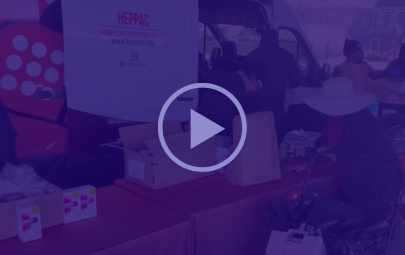
Our new “Trust is Medicine” video shines a light on the people and programs putting that belief into practice. It explores how harm reduction programs, especially syringe services programs (SSPs), are opening a trusted doorway to options along the full continuum of care.
While medications for addiction treatment (MAT) are considered the gold standard of care for opioid use disorder and can play a critical role in supporting long-term recovery, without harm reduction programs, accessing addiction treatment often comes with several challenges. People may face a complex web of barriers—from finding a provider accepting new patients to navigating transportation, insurance requirements and stigma. But thanks to sustained investment and policy progress in California, dozens of harm reduction programs now offer more direct access to medications for addiction treatment, often the same day, in a familiar place, with people participants already know and trust. That approach aligns with what people say they want: in a California survey of syringe services program participants, nearly three-quarters of respondents interested in medications for opioid use disorder said they would prefer to start treatment through a harm reduction program. Harm reduction providers are not separate from treatment; they are often among its most effective entry points, meeting people where they are, without judgment, and offering flexible pathways to medications, alongside food, hygiene and other supportive services.
The programs featured in the video are part of the California Overdose Prevention and Harm Reduction Initiative (COPHRI), a statewide effort supported by The Center at Sierra Health Foundation with funding from the California Department of Public Health. In 2025, COPHRI-funded organizations made up just 1% of California’s naloxone-receiving organizations—yet reported nearly 50% of the state’s overdose reversals, reaching the people most at risk of dying from an overdose.
One program participant shared, “Every week, I got something to look forward to coming here… the whole social thing really helps, gives me responsibility.”
An SSP program staff member added, “They may not access [MAT] right away…but when they’re ready, they know where to come. They don’t have to make an appointment.”
That is what the continuum of care looks like when it is built around trust. Prevention, harm reduction, treatment and recovery can be essential parts of the same journey, and often, harm reduction is where the journey begins.
To learn more about this work, explore COPHRI and the harm reduction programs advancing a more compassionate, effective response to opioid use disorder across California.
Inspired by the stories featured in the video? Download our new one-pager on MAT in harm reduction programs to learn more about the low-barrier approaches helping Californians build connections to care.